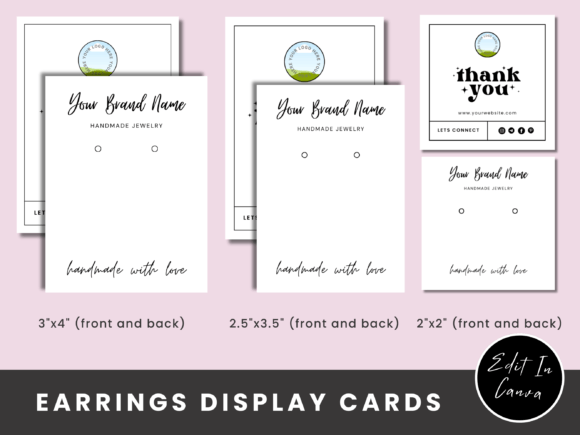
Editable Earring Display Card Template
In the competitive landscape of handmade jewelry and small business retail, presentation is often as critical as the product itself. For independent artisans and boutique owners, the first point of contact with a customer is frequently not the earring in their ear, but the card holding it on a shelf or in an online listing. This is where a well-designed Editable Earring Display Card Template becomes an essential operational tool. It bridges the gap between a raw craft item and a polished retail product, offering a professional finish that can significantly influence perceived value.
The modern creator does not always have access to expensive graphic design software or the budget to hire a designer for every new collection drop. Consequently, there is a growing demand for resources that are both aesthetically pleasing and technically accessible. The template described here addresses this need by combining customizable design elements with the widespread usability of Canva. By allowing users to edit and print display cards from home, it empowers sellers to maintain brand consistency without sacrificing time or technical expertise.
Understanding the Core Offering
At its foundation, this resource is a digital asset designed to streamline the packaging process for earrings. Unlike static PDFs that offer no flexibility, these templates are fully editable. This means that text fields, background colors, fonts, and graphical elements can be modified to align with specific brand identities. Whether a seller is launching a minimalist gold collection or a vibrant, bohemian line, the ability to tailor the visual language of the display card ensures that the packaging reinforces the jewelry’s aesthetic rather than competing with it.
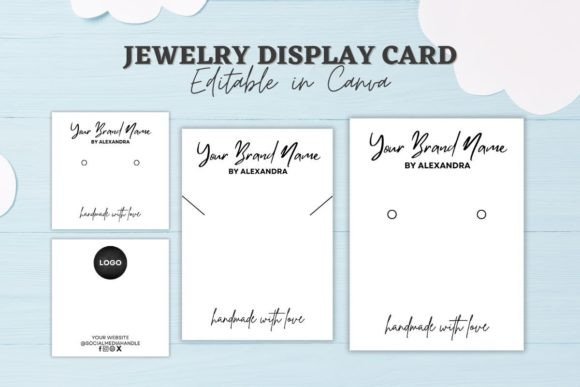
The listing includes three distinct sizes: 3 x 4 inches, 2.5 x 3.5 inches, and 2 x 2 inches. This variety is crucial because earring styles vary widely. Stud earrings require a smaller footprint, while statement pieces or hoops benefit from the larger canvas provided by the 3 x 4 format. Having multiple sizes in one package allows a single seller to standardize their workflow across different product lines, reducing the complexity of inventory management for packaging materials.
Key Advantages of the Canva-Based Workflow
The integration with Canva is a significant factor in the utility of this Editable Earring Display Card Template. Canva has democratized graphic design, providing a user-friendly interface that requires no prior training. Here is how the specific features translate into practical benefits for small business owners:
- User-Friendly Interface: The templates are structured to prevent technical complications. Users do not need to understand complex layering or vector manipulation. Simple drag-and-drop functionality allows for quick adjustments, making the design process accessible to those who may consider themselves non-designers.
- Time-Efficiency: In a fast-paced market, speed matters. Creating custom graphics from scratch can take hours. With pre-built, professionally crafted layouts, a seller can produce a set of branded cards in minutes. This efficiency is particularly valuable during peak seasons like holidays, when order volumes spike and turnaround time is critical.
- High-Quality Aesthetics: The designs are intended to be eye-catching. Professional typography and balanced layouts ensure that the earrings remain the focal point while the card provides context and elegance. This attention to detail helps products stand out in crowded marketplaces, whether on Etsy, Instagram, or at local craft fairs.
- Versatility: While primarily designed for physical display cards, the digital nature of these assets offers secondary uses. The same templates can be adapted for social media posts, email newsletters, or digital gift certificates. This versatility maximizes the return on investment for the template purchase.
- Full Customizability: Sellers have complete control over the visual identity. Colors can be adjusted to match seasonal themes, fonts can be changed to reflect brand personality, and logos can be inserted easily. This level of customization ensures that the final product feels personal and unique to the brand.
- Instant Accessibility: There is no waiting period for shipping or production. Upon purchase, the templates are available for immediate download and use. This instant gratification supports agile business practices, allowing sellers to react quickly to trends or customer feedback.
Practical Application and Real-World Performance
When evaluating the effectiveness of such a tool, it is important to look beyond the initial design and consider the end-to-end experience. For a jewelry maker, the goal is to create a cohesive unboxing experience. A poorly printed or misaligned card can detract from the quality of the jewelry. Therefore, the reliability of the template’s layout is paramount.
The inclusion of front and back designs suggests a comprehensive approach to branding. The front typically serves as the hook, displaying the brand name and perhaps a key visual element, while the back can house care instructions, material details, or social media handles. This dual-sided utility adds informational value, reducing the need for separate inserts or tags, which simplifies the packing process.
However, success with any printable template depends heavily on the user’s printing setup. While the digital file is high-quality, the physical output is subject to the capabilities of the user’s printer and paper choice. To achieve the "polished and personal touch" advertised, sellers should invest in quality cardstock. Thin, flimsy paper can undermine the professional appearance of the design. Recommendations would include using at least 80lb cover weight paper for durability and a matte or glossy finish depending on the desired aesthetic. Additionally, precise cutting tools are necessary to ensure clean edges, especially for the smaller 2 x 2 inch cards where margins are tighter.
Who Benefits Most?
This resource is particularly well-suited for specific segments of the creative economy. Small business owners who sell directly to consumers (DTC) will find the most immediate value. For these entrepreneurs, every dollar saved on external design services and every minute saved on production time contributes directly to profitability. The ability to update designs quickly means they can pivot their marketing strategy without incurring additional costs.
Freelancers and creators who host pop-up shops or attend artisan markets also benefit significantly. In these environments, first impressions are fleeting. A stack of uniform, beautifully presented earring cards signals professionalism and trustworthiness to potential buyers. It elevates the brand from "hobbyist" to "business," which can justify higher price points.
Educators and hobbyists involved in teaching jewelry-making courses might also utilize these templates to provide students with a professional-looking portfolio piece. By including a branded card in their kit, instructors add tangible value to their educational offerings.
Potential Limitations and Considerations
No tool is without its constraints. One limitation of relying on a template-based system is the risk of homogenization. If many sellers use the same base design, the market may become saturated with similar-looking packaging. To mitigate this, users must actively customize the templates. Changing color palettes, swapping fonts, and altering layout structures are essential steps to differentiate one’s brand from others using the same resource.
Furthermore, the reliance on Canva means that an internet connection and a Canva account (free or Pro) are required for editing. While Canva’s free tier is robust, some premium elements within the templates might require a subscription if the user wishes to use them exclusively. Sellers should review the specific elements included in the download to ensure they align with their current subscription status or willingness to upgrade.
Another consideration is the learning curve associated with advanced customization. While basic editing is simple, achieving a truly bespoke look may require some experimentation with alignment and spacing. New users might spend more time initially tweaking the design than anticipated. However, this investment of time usually pays off in the form of a stronger brand identity.
Conclusion
The Editable Earring Display Card Template represents a pragmatic solution for jewelry makers seeking to elevate their product presentation. By leveraging the accessibility of Canva and the flexibility of digital editing, it removes traditional barriers to professional-grade design. Its multi-size support and dual-sided layout offer practical utility for various business models, from online stores to local markets.
While success ultimately depends on the user’s commitment to customization and quality printing, the template provides a strong foundation for building a cohesive and attractive brand image. For those looking to streamline their packaging workflow and enhance the perceived value of their earrings, this resource offers a cost-effective and efficient path forward. It is not just a design file; it is a strategic asset for any serious jewelry entrepreneur aiming to make a lasting impression.